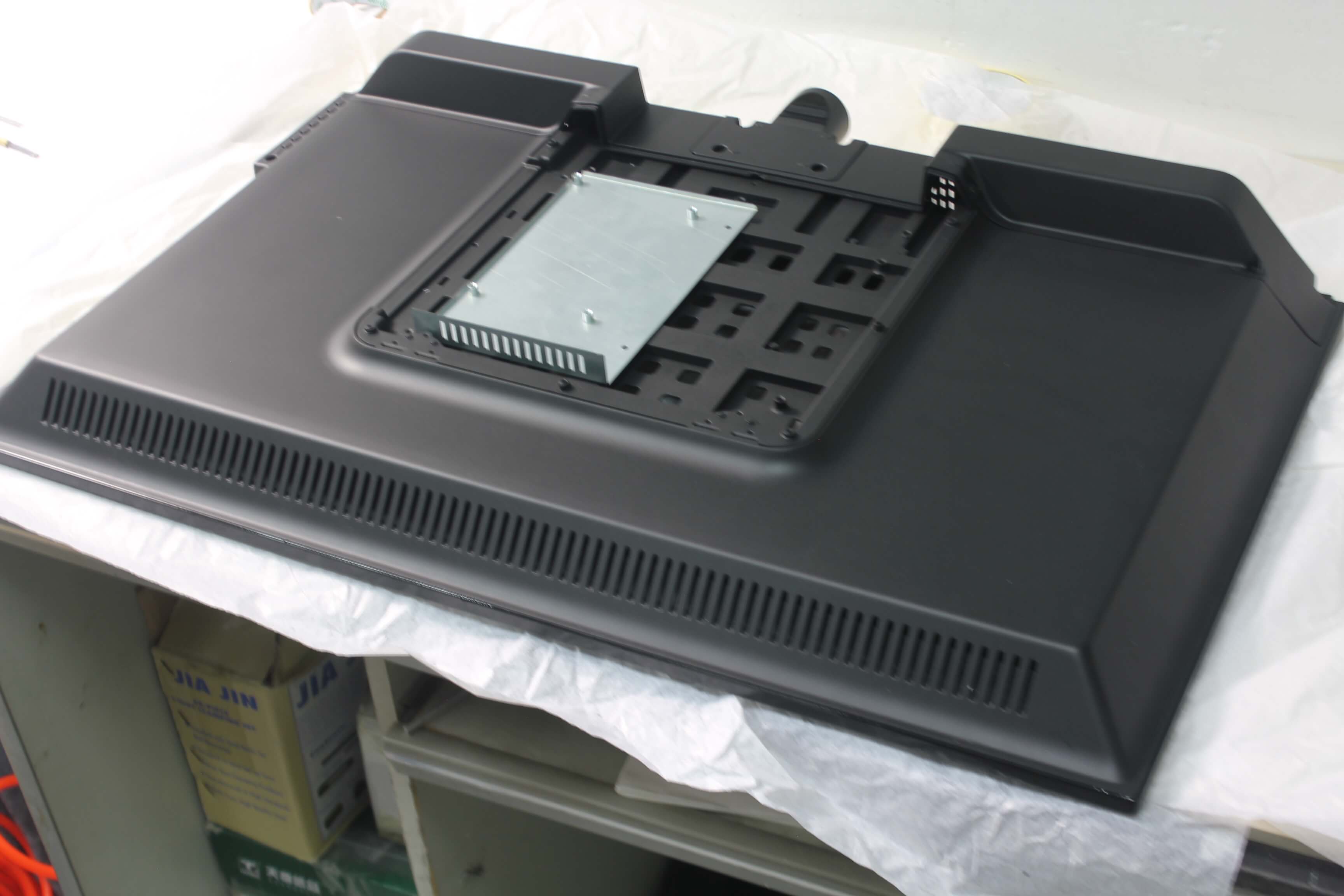
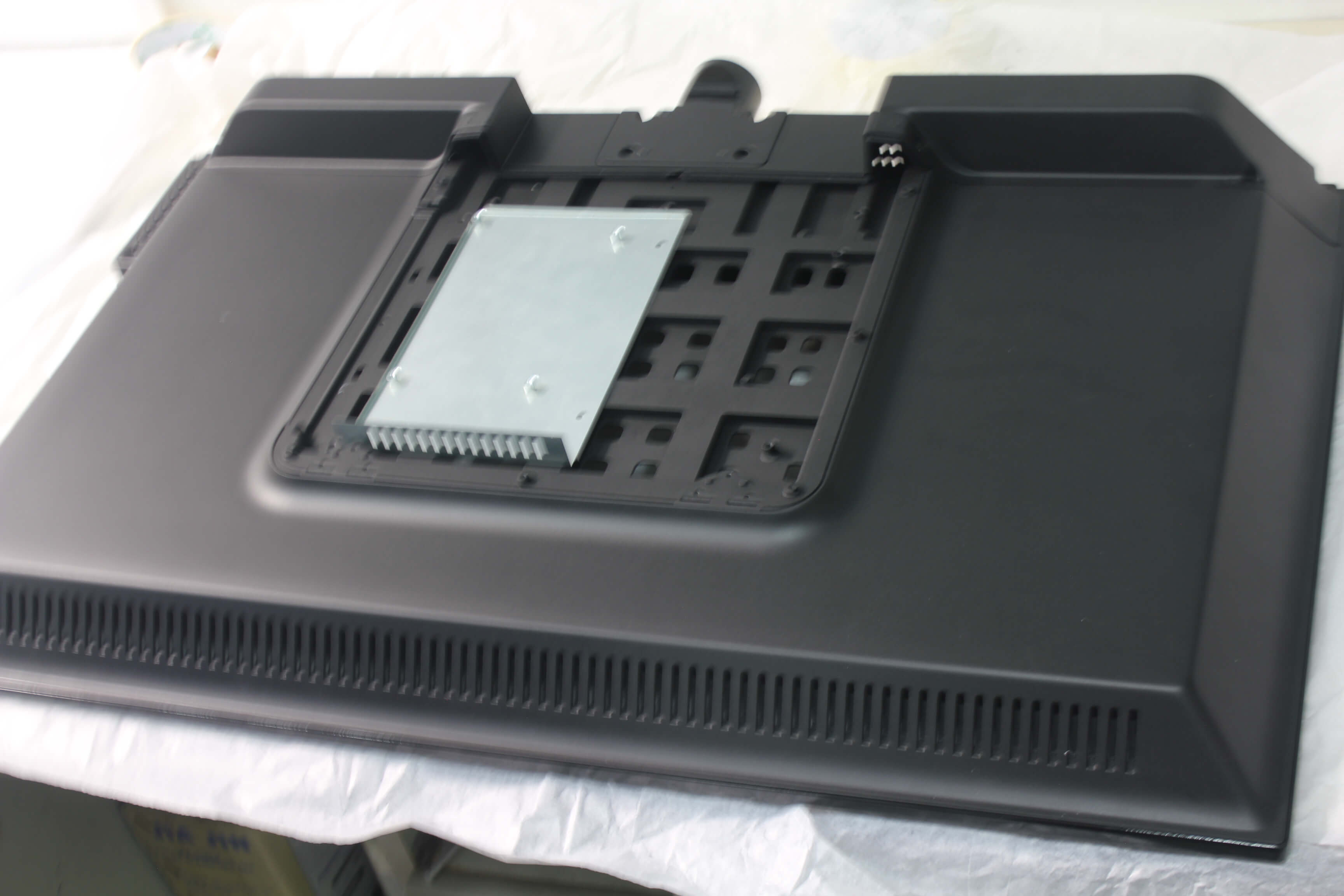
Television Back Cover
Home Appliance
Project Information
| Project Type | Home Appliance |
| Quantity | 1 Set |
| Process | CNC, Sheet Metal |
| Material | PC+ABS, Sheet Metal |
| Tolerance | ISO 2768 M, Fitting well |
Project Content
The Necessity of Prototyping in TV Development
The back cover of a modern television is more than just a protective shell; it is a complex structural component that supports the entire display panel and internal electronics. Prototyping is vital for:
Structural Rigidity & Warpage Control: Large, thin-walled plastic parts are prone to warping. Prototyping allows engineers to verify if the internal rib structures provide enough support to keep the screen perfectly flat.
Thermal Management: Testing the efficiency of the ventilation patterns to ensure heat from the backlight and power board dissipates correctly.
Assembly & Interface Verification: Ensuring every screw boss, snap-fit, and I/O port (HDMI, USB, etc.) aligns perfectly with the internal chassis and the front bezel.
Advantages: Prototyping vs. Mass Production
Snap-Fit Validation: Refining the tension and clearance of plastic clips to ensure a "click" fit without breaking, saving months of mold adjustment (T0-T3 stages).
Internal Component Layout: Verifying the cable management routes and speaker box enclosures within the tight confines of slim TV designs.
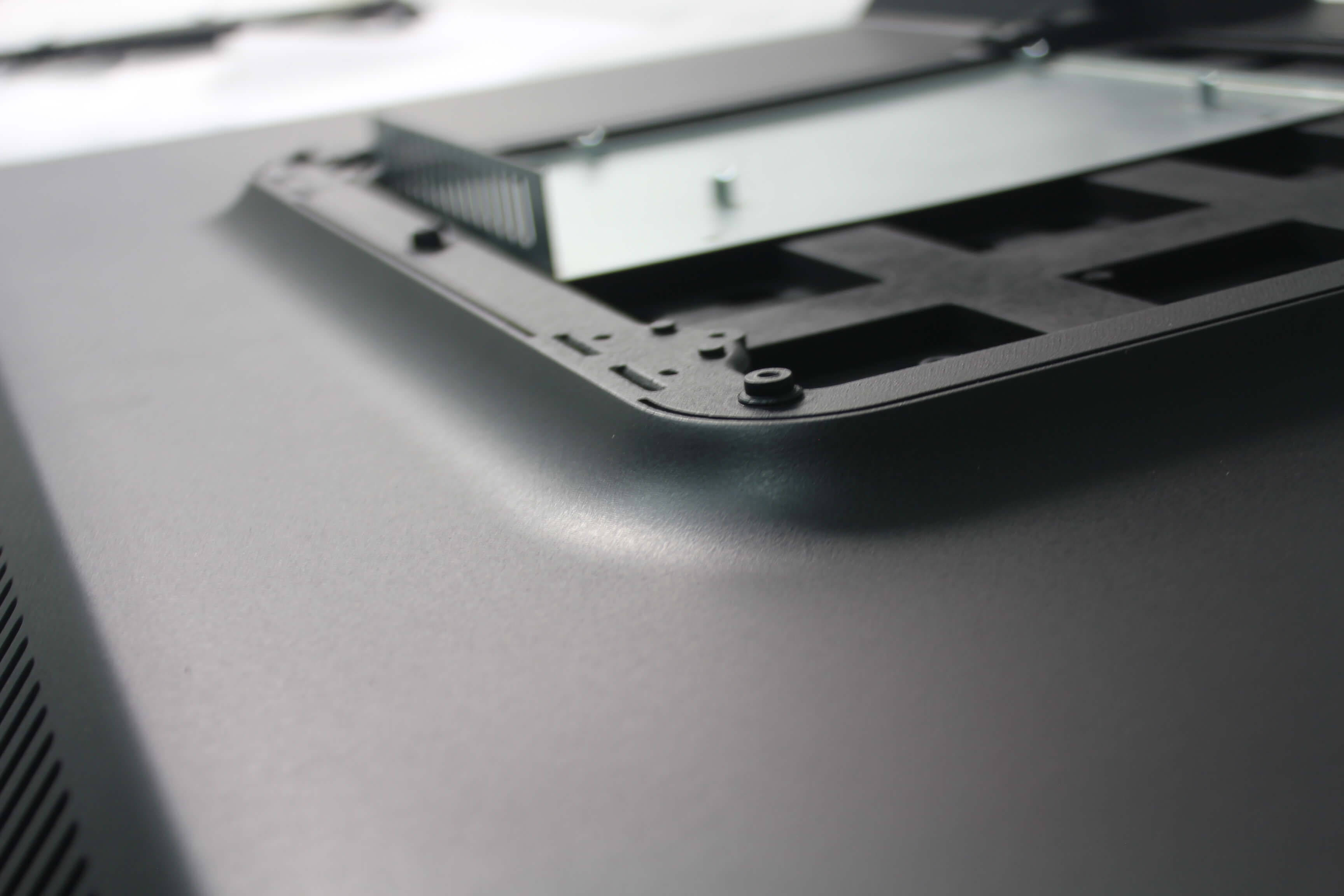
Surface Texture Evaluation: Testing different VDI or Mold-Tech textures to achieve the desired matte or brushed metal effect before committing to large-scale injection molds.
Material Selection for TV Back Covers
Flame-Retardant ABS (UL94-V0): The most common choice, providing excellent impact resistance and meeting strict electronic safety standards.
PC/ABS Alloy: Used for high-end or ultra-slim models requiring higher heat resistance and superior structural strength.
HIPS (High Impact Polystyrene): A cost-effective option for initial design verification and physical mock-ups.
Glass-Filled Plastics (PA+GF): Used for internal structural frames that require extreme stiffness to prevent the TV from bending.
Technical Processes & Manufacturing Steps
Large-Format CNC Machining: Utilizing high-speed, large-travel CNC machines to carve the entire back cover from a single block of engineering plastic, ensuring no seams or joints.
Precision Undercut Machining: Using specialized tooling to create the complex internal snap-fits and mounting features.
High-Detail Surface Finishing: Applying Texture Painting to simulate the look of injection-molded plastic, or Silk-Screening for brand logos and regulatory markings.
Heat-Stake / Insert Pressing: Precisely installing brass threaded inserts to test the durability of VESA wall-mount points.
Precision & Large-Scale Quality Control
Dimensional Stability: Maintaining tolerances of ±0.1mm to ±0.2mm across a large surface area (e.g., 55" to 75" covers) to ensure perfect alignment with the display.
Wall Thickness Consistency: Ensuring uniform wall thickness (typically 1.5mm - 2.5mm) to accurately simulate the mechanical behavior of an injection-molded part.
Zero-Defect Surface: Delivering a flawless exterior surface free of tool marks or stress lines, ready for high-resolution marketing photography.
Customer Feedback
"The television back cover components delivered by Henny Manufacturing provided excellent quality and consistency for our production line."
— Project Manager, Electronics Company